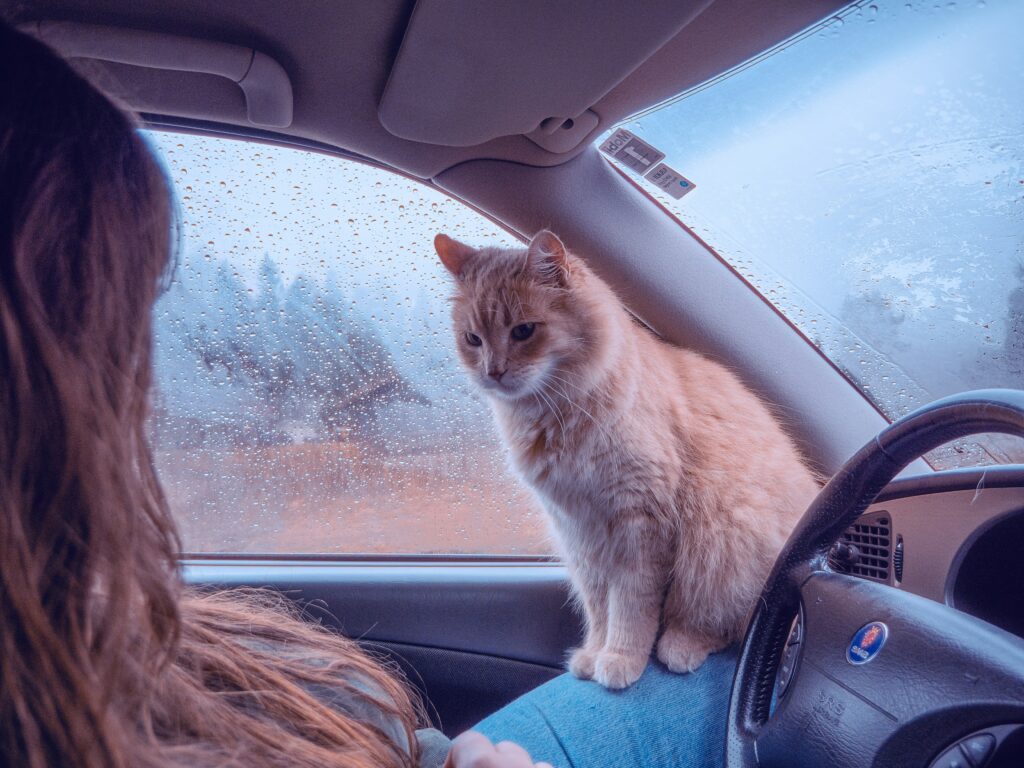

Free-roaming cats often accompany their owners outdoors, yet their freedom brings uncertainty. When they explore open spaces, they can disappear behind fences, wander into nearby yards, or settle beneath parked cars, and responsible guardians want to know where they go. Modern cat trackers provide real-time visibility during such excursions, allowing owners to react quickly if their cat strays into an unfamiliar area or remains inactive longer than normal.
Monitoring Outdoor Behavior Safely
Cats that roam widely can behave unpredictably, especially when exposed to unfamiliar sounds and moving objects. Owners often struggle to identify patterns in their cats’ routes, which limits their ability to create safe boundaries. The following points explain why tracking devices contribute to safety and awareness:
- location oversight — precise positioning shows whether a cat crosses busy roads, industrial zones, or crowded spaces;
- health-related observation — changes in movement duration or reduced roaming may indicate discomfort or illness;
- night activity control — tracking after dark helps owners reduce late-night searching and ensures safer retrieval;
- escape management — when traveling or relocating, monitoring minimizes the risk of permanent loss;
- territory mapping — recorded route data helps identify common resting spots or areas of conflict.
Free-roaming cats may also encounter regional hazards, and those situations rarely reveal themselves immediately. Tracking data makes risks visible, which supports consistent supervision even when the animal is several houses away. Owners can respond faster if patterns change suddenly, because the collected information becomes more reliable over time.
Supporting Habits and Reducing Owner Anxiety
Cats create routines across rooftops, garden paths, and storage sheds, yet those pathways are invisible when owners remain indoors. Tracking devices help transform uncertainty into structured knowledge. When a pattern emerges, caregivers recognize when the cat is simply following established routes rather than drifting into unknown neighborhoods. That awareness significantly lowers anxiety levels and reduces unnecessary nighttime searching.
Device-based supervision also helps families coordinate responsibilities. When several household members look after a single cat, real-time data prevents confusion. One person can verify location before letting the animal outside, while another can check progress during outdoor play. It becomes easier to make collective decisions when dependable evidence is shared.
Encouraging Responsible Outdoor Exploration
Outdoor enrichment benefits feline health, because natural surfaces, open air, and diverse scents stimulate curiosity. However, responsible supervision must balance this freedom with safety. Tracking technology provides a structured method for offering controlled independence. Instead of confining a cat permanently indoors, caretakers can approve timed outdoor sessions with measurable oversight.
Many owners also use location records to understand which neighbors their cats approach. That knowledge supports polite conversations about territory, garden access, or shared feeding spaces. When documented clearly, such information avoids speculation and strengthens cooperative behavior among nearby residents. Responsible guardianship includes respecting local environments, and technology makes that easier.
Advanced systems store historical paths, which reveal how seasonal changes affect movement. A cat that prefers shaded gardens in summer may switch toward sheltered porches in winter. Recognizing these shifts leads to better feeding schedules, warmer bedding locations, and improved planning when travel is expected. Owners appreciate that level of predictability, especially when preparing temporary outdoor structures.
Finally, some devices include alert settings when the animal leaves a defined radius. Such boundaries allow controlled roaming within approved zones. Notifications support rapid retrieval without intrusive restrictions. The convenience of digital monitoring increasingly shapes modern pet care, and the same principle extends to families managing active, outdoor-oriented cats who enjoy frequent walks or off-leash time made safer by systems offered by Petloc8.
 Lead Pet Behavior Specialist
Brian Camacho is an expert in pet behavior and training at Pet Paw Shack. With a deep understanding of animal psychology, he specializes in helping pets and their owners build strong, healthy relationships through positive reinforcement techniques. Brian’s innovative approach to training focuses on making behavior modification a fun and rewarding experience for both pets and their families.
Lead Pet Behavior Specialist
Brian Camacho is an expert in pet behavior and training at Pet Paw Shack. With a deep understanding of animal psychology, he specializes in helping pets and their owners build strong, healthy relationships through positive reinforcement techniques. Brian’s innovative approach to training focuses on making behavior modification a fun and rewarding experience for both pets and their families.