
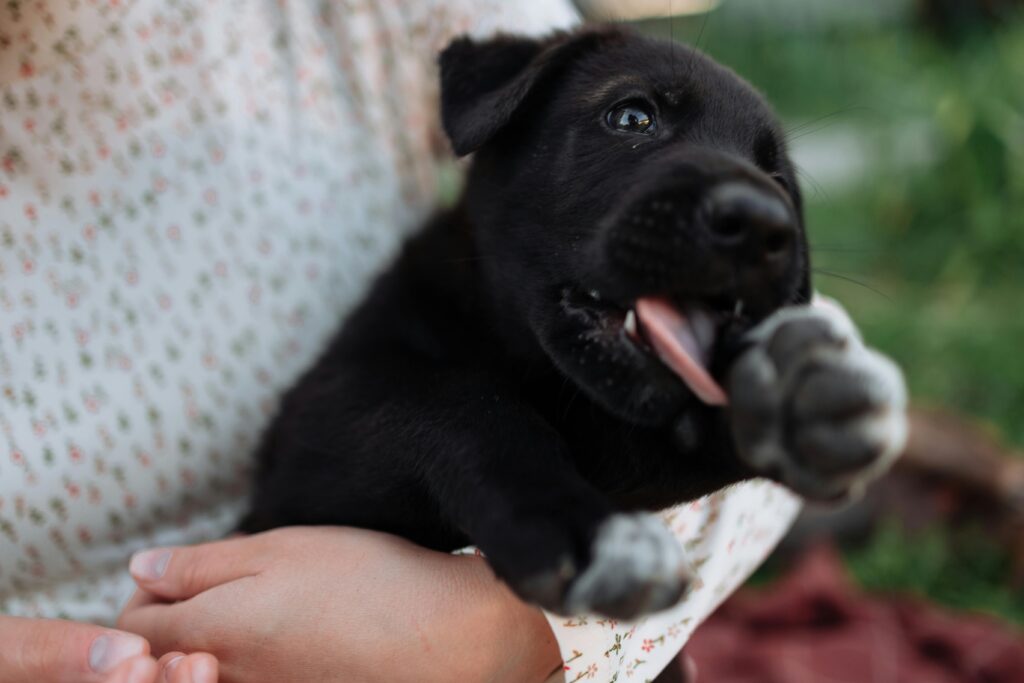
Puppies enter the world with a mouthful of tiny needles that seem designed to surprise even the most prepared new owners, and that early stage can feel chaotic without the right guidance. Many people exploring mini goldendoodle breeders online get excited about bringing home a gentle companion, only to discover that even the sweetest pup comes equipped with impressively sharp baby teeth. Understanding why those teeth exist, how long they last, and how to redirect the behavior makes the entire “land shark” phase far more manageable.
Why Puppy Teeth Feel So Sharp
The teeth of puppies are purposefully designed. Puppies can puncture food, explore their surroundings, and communicate with their littermates because of their tiny tips, something new owners quickly notice when researching breeds or even browsing listings like a Mini Goldendoodle for sale. Even a light nip feels sharper than an adult dog’s bite because infant teeth aren’t designed for grinding, and all the pressure is concentrated at the tip. Additionally, these teeth play a developmental role by guiding the jaw, assisting in the establishment of bite patterns, and facilitating the appropriate eruption of adult teeth.
Puppies continually try new things over the first few weeks. To determine what is solid, soft, resistant, or thrilling, they use their tongues. When a puppy leaves the litter and enters a family, its natural curiosity spreads to human hands, clothing, ankles, and anything that moves.
How the Biting Phase Typically Progresses
Although each breed has a slightly different teething schedule, most puppies start losing their baby teeth between the ages of twelve and sixteen weeks. During this change, gums swell, pressure increases, and chewing becomes a natural coping mechanism. During this phase, many owners observe destructive chewing or more forceful nipping, not because the puppy is misbehaving, but rather because their mouth is unpleasant.
The sharper baby teeth fall out about four to six months, as adult teeth erupt. This change frequently results in observable improvement: the puppy becomes more receptive to boundaries, less agitated, and easier to redirect. However, when the puppy develops impulse control, some residual mouthiness may persist, particularly during play or exciting periods.
Smart Ways to Make This Stage Easier
Your puppy is attempting to use the only tool they know to make sense of the world, not to be challenging. They learn without confusion when there are clear procedures, lots of chewing options, and consistent information. Exaggerated responses or punishment should also be avoided since they may intensify excitement or induce fear.
Here are reliable approaches that work well during the land shark phase:
- Offer multiple textures of safe chew toys so your pup can self-soothe and relieve gum pressure.
- Use short, calm time-outs if nipping escalates during play as a way to teach boundaries without drama.
- Redirect mouthing to toys the moment teeth touch skin, reinforcing what is acceptable.
- Encourage gentle play through slow movements rather than fast, exciting actions that trigger biting.
- Layer in simple training cues like “leave it” and “gentle” to build impulse control early.
Building Confidence While Managing Nipping
Reducing sociability during the biting phase out of frustration or fear of overstimulation is a common mistake. In actuality, purposeful exposure to novel sights and noises frequently aids in pups’ relaxation since it directs their energy into curiosity rather than frantic play. Young puppies learn self-control when they interact with calm adult dogs, and they learn how to control their excitement when they interact with people under supervision.
Attention can be diverted from biting through puppy lessons, brief training sessions, enrichment games, and confidence-building activities like negotiating little barriers or puzzle toys. Puppies’ reliance on biting to communicate naturally diminishes as they gain confidence and coordination.
It’s equally vital to reinforce peaceful periods. While many owners simply concentrate on correcting undesirable behavior, development can be accelerated by rewarding quiet chewing, relaxed body language, and kind interactions. Your puppy eventually learns that although biting stops the enjoyment, calm behavior garners attention.
Final Thoughts
The land shark phase may test your patience, but it’s a short chapter in the long life of a dog who will eventually bring consistency, affection, and a steady presence to your home. Learning why baby teeth function the way they do and how to redirect the behavior allows you to guide your puppy through this stage with far less frustration. Families browsing mini goldendoodle breeders online often envision cuddles and calm evenings, yet mastering this early phase is what turns that vision into reality by shaping a gentle, confident, well-mannered companion who thrives long after the baby teeth are gone.
 Veterinary Advisor & Health Expert
Anthony Brooks is the in-house Veterinary Advisor at Pet Paw Shack, offering expert advice on pet health, disease prevention, and general veterinary care. With years of experience as a licensed veterinarian, Anthony helps guide pet owners through essential topics like vaccinations, routine checkups, and emergency care. His commitment to keeping pets healthy ensures that Pet Paw Shack delivers trusted and accurate medical insights.
Veterinary Advisor & Health Expert
Anthony Brooks is the in-house Veterinary Advisor at Pet Paw Shack, offering expert advice on pet health, disease prevention, and general veterinary care. With years of experience as a licensed veterinarian, Anthony helps guide pet owners through essential topics like vaccinations, routine checkups, and emergency care. His commitment to keeping pets healthy ensures that Pet Paw Shack delivers trusted and accurate medical insights.