
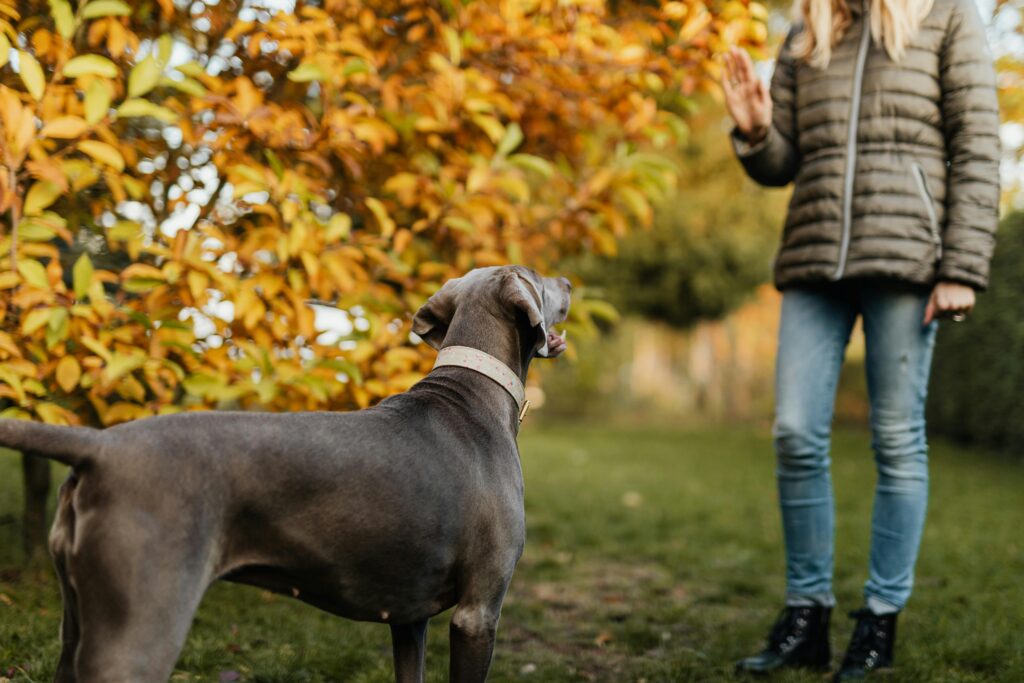
Many dog training guides list a handful of “essential commands”: sit, stay, down, leave it, drop it, etc.
But when survival, injury prevention, or a split second dangerous situation looms, only one command consistently delivers across contexts. That command is often overshadowed by others in lists, yet it carries outsized weight when stakes are high.
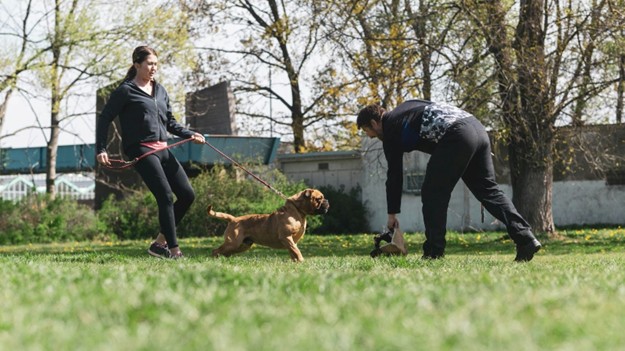
That’s why we argue: a rock‑solid recall (come/“here”) is the single most important command for safety.
What “recall” actually means, beyond basics
When I say “recall,” I don’t just mean a dog coming when mildly called during a walk. A truly reliable recall means:
- Dog responds to the name + recall cue from any distance, any context, regardless of distraction or temptation (traffic, other dogs, food on ground, wildlife, loud noises).
- Dog comes immediately, without hesitation or repetition, on the first command.
- Response is faster than instinctive or panic reactions.
- Return ends in a safe, controlled finish (sit at your side, collar touch, or leash clip-on), not running circles, darting off again, or bounding toward distraction.
This level of reliability isn’t natural for most dogs. It requires deliberate training, reinforcement, and maintenance.
Why recall outranks other commands for safety
Recalls wins in emergency scenarios
Imagine a dog slipping the leash in a public park, spotting a stray dog or cat, or chasing a small animal toward a busy road. This is especially risky for dog breeds like the Border Terrier that have high prey drives. Or consider a front gate accidentally left open: a moment’s freedom means a car, a toxic object, a stranger, anything.
In those cases, basic commands like “sit,” “stay,” or “leave it” might never work: the dog is too reactive, too stimulated, too far, too undisciplined. Only a reliable recall like a loud, trusted “come!” has the potential to yank them back from danger.
Indeed, one training manual emphasises recall as vital safety gear when a dog escapes control or faces hazards off‑leash.
Recall enables freedom and proper socialisation without forfeiting safety
For many families, especially those who want their dogs to enjoy off‑leash walks, dog‑park visits, and hikes, a solid recall offers that freedom. As one trainer puts it, “the better the recall, the safer the dog when off‑leash, and the more he can enjoy off‑leash freedom with his human.”
At the same time, a dog that reliably returns reduces risk of escapes, bites, or injuries, a major factor given rising dog‑bite statistics worldwide.
Strong recall underpins other safety behaviours and training
Recall training builds bond, trust, impulse-control, and human–dog communication. A dog that responds to recall is more likely to heed other commands, or at least to check in with its owner before taking risky choices. Many comprehensive “top commands” lists from professional trainers anchor recall among the first few behaviours to teach.
Furthermore, recall provides a safety net when other commands or environmental control fail: when “leave‑it,” “stay,” or “drop it” cannot instantly halt danger or temptation, recall can, if it’s reliable.
What research says about benefits & limits of recall and structured training
Behavioural‑education / bite‑prevention literature emphasises that proper training and socialisation, rather than breed‑based restrictions, are key to reducing dog bites and aggression incidents.
Experts advocating bite prevention urge owners to combine obedience training with early socialisation, learning to read canine body language, and promoting calm environments. This shows that recall alone is not magic, but an essential pillar within holistic safety practices.
Other aspects to consider
The slip‑the‑leash near busy roads
I recall one case (from a local dog‑owner forum, but clearly representative) where a dog chased a cat across a suburban street when the leash slipped. Owner called “Come!” First time, firm tone, and the dog returned immediately, saved from an oncoming car. Another similar story: during a dog‑park outing, a sudden car back‑fired; startled dogs dashed, but the few with solid recall came back to owners straight away, while others bolted into chaos.
These everyday moments rarely make it into “top commands” lists, but they speak to why recall can be life‑saving.
“Recall fatigue”
It happens. Many trainers warn against calling your dog only when you need something.
If “come here” always signals “bath time,” “vet time,” or “time to go home,” the dog may learn to associate the cue with negative or neutral outcomes, reducing motivation. Trainers advise mixing up recall practice: call during play, during short breaks, or random intervals, and always followed by something good (treat, play, praise) so that recall remains a gateway to reward, not doom.
This “recall fatigue” problem explains why many pet owners end up with unreliable recall.
Breed and personality differences
Some dogs (especially high-driven, scent‑hunting, or working breeds) may find environmental distractions or triggers far more motivating than a “come” cue. That doesn’t mean they can’t learn recall. However, the training must be tailored: very high-value rewards, distraction-proof practice, gradual distance increases. Veterinary‑research‑backed guides often note recall works for all breeds, but success hinges on consistent, positive-reinforcement-based training.
The role of human behaviour and consistency
Recall reliability doesn’t rest solely on the dog. Often it depends more on the human: how and when you call, whether the dog gets rewarded, whether you follow through. If the owner calls only as a punishment or rarely rewards, recall becomes meaningless.
How to build a truly reliable recall
Below is a skeletal protocol, more like what a working trainer or serious hobbyist uses, not a casual “sit down for treats” approach.
- Start in low‑distraction environment — indoors, quiet yard, familiar space. Work only on name + recall cue. Get dog to make eye contact, come to you, then treat + praise + joy. Keep sessions short (5–10 min), frequent (2–3×/day).
- Add distance slowly — begin with a few metres, then increase gradually. Use long line (or rope/leash clipped to static object) so you have safety net while building distance.
- Vary recall triggers and contexts — call sometimes for play, sometimes for treats, sometimes before letting dog go free, sometimes before walking. Avoid always pairing recall with negative or neutral outcomes (vet, bath, end of fun).
- Introduce distractions incrementally — sounds, toys, other people/dogs, food on ground. Reinforce heavily when the dog responds correctly under distraction.
- Practice emergency recalls — e.g. while dog chases a toy or shows high excitement; call “come,” reward as soon as dog commits to returning (not waiting until arrival). This builds trust that recall works even when dog is highly motivated elsewhere.
- Maintain recall throughout life — occasional refreshers. Especially after long breaks, during holidays, changes in routine or environment.
- Know each dog’s personality & limits — for high‑drive dogs, use ultra‑high‑value treats or favourite toy; be patient; don’t progress too fast. For anxious or distracted dogs, start with shorter distances and simpler contexts.
Recall Isn’t Natural — That’s Why It’s So Important
Dogs aren’t wired to run away from stimulation. They’re designed to chase, investigate, roam. Their instincts scream “Go!” not “Return to handler.” That’s why recall has to be taught, and taught against their instincts.
It’s also why a dog that returns to you while adrenaline is high deserves serious praise. You’re not just calling them away from fun. You’re asking them to override centuries of instinct because they trust you more than the thrill.
That trust doesn’t come from one weekend of training. It’s built through reps, rewards, and real-world conditioning.
But it’s doable for every dog, despite their natural instincts.
 Veterinary Advisor & Health Expert
Anthony Brooks is the in-house Veterinary Advisor at Pet Paw Shack, offering expert advice on pet health, disease prevention, and general veterinary care. With years of experience as a licensed veterinarian, Anthony helps guide pet owners through essential topics like vaccinations, routine checkups, and emergency care. His commitment to keeping pets healthy ensures that Pet Paw Shack delivers trusted and accurate medical insights.
Veterinary Advisor & Health Expert
Anthony Brooks is the in-house Veterinary Advisor at Pet Paw Shack, offering expert advice on pet health, disease prevention, and general veterinary care. With years of experience as a licensed veterinarian, Anthony helps guide pet owners through essential topics like vaccinations, routine checkups, and emergency care. His commitment to keeping pets healthy ensures that Pet Paw Shack delivers trusted and accurate medical insights.